
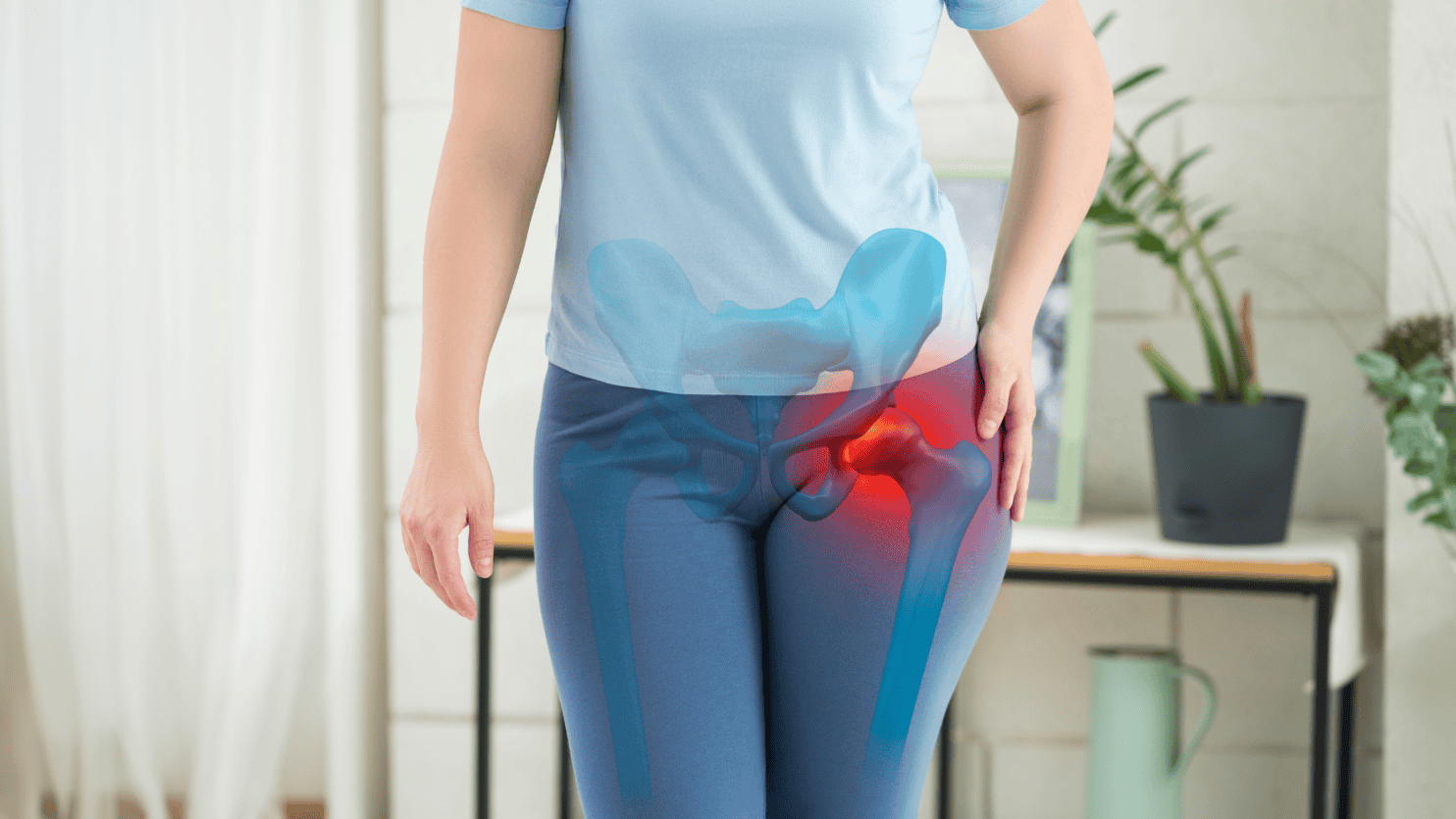
Pain in the front of the hip or groin is a common complaint among athletes, active adults, and even people who spend long hours sitting at work. In many cases, the initial diagnosis is a simple groin strain, especially if the pain developed after exercise or lifting. However, when symptoms linger despite rest and physical therapy, the true source of discomfort may be a hip labral tear.
Hip labral tears are frequently overlooked because they produce symptoms that closely resemble muscle strains. Understanding the differences can help patients receive an accurate diagnosis and appropriate treatment sooner, potentially preventing months of unnecessary pain and limited mobility.
What Is a Hip Labral Tear?
The labrum is a ring of strong cartilage that surrounds the rim of the hip socket (acetabulum). It serves several important functions, including:
- Deepening the hip socket to improve joint stability
- Helping distribute pressure evenly across the joint
- Providing cushioning during movement
- Maintaining a seal that supports smooth hip motion
A hip labral tear occurs when this cartilage becomes damaged. Tears may develop gradually from repetitive motion or suddenly after trauma.
Common causes include:
- Sports involving twisting or pivoting
- Repetitive hip flexion
- Structural abnormalities such as femoroacetabular impingement (FAI)
- Falls or motor vehicle accidents
- Age-related degeneration
Why Are Hip Labral Tears Commonly Mistaken for Groin Strains?
Hip labral tears are often misdiagnosed as groin strains because both conditions cause pain in nearly the same location. Early symptoms may be subtle, making it difficult to distinguish between muscle injury and joint damage without further evaluation.
Groin strains involve injury to the muscles or tendons of the inner thigh, while labral tears affect cartilage inside the hip joint. Since both injuries may occur during sports or physical activity, they frequently present similarly during the initial examination.
The overlap in symptoms often delays the correct diagnosis.
What Symptoms Suggest a Hip Labral Tear Instead of a Groin Strain?
Although both injuries can cause groin pain, hip labral tears often produce additional symptoms that point toward an internal joint problem.
- Deep pain inside the hip or groin
- Clicking, popping, or catching sensations
- Locking of the hip joint
- Pain during prolonged sitting
- Pain when twisting or pivoting
- Limited hip range of motion
- A feeling that the hip may “give out”
Groin strains, on the other hand, typically produce tenderness directly over the injured muscle and pain that gradually improves within several weeks with appropriate treatment.
Why Can Hip Labral Tears Go Undiagnosed for Months?
Hip labral tears can remain undiagnosed because standard X-rays usually do not show cartilage injuries. Unless providers suspect damage to the labrum, patients may initially receive treatment focused solely on muscle strain.
- Symptoms mimic common sports injuries.
- Pain may come and go.
- Patients often continue daily activities despite discomfort.
- MRI arthrograms provide the clearest images of the labrum.
- Other hip conditions may occur at the same time.
How Are Hip Labral Tears Diagnosed?
Diagnosing a hip labral tear begins with a thorough medical history and physical examination.
- Assess hip flexibility
- Perform specialized hip impingement tests
- Evaluate gait and balance
- Determine which movements reproduce symptoms
Imaging studies may include X-rays, MRI scans, MRI arthrograms, and CT scans in selected cases. Diagnostic hip injections may also help confirm the source of pain.
What Treatment Options Are Available?
Treatment depends on symptom severity, activity level, and the presence of underlying structural abnormalities.
- Activity modification
- Physical therapy
- Anti-inflammatory medications when appropriate
- Image-guided corticosteroid injections
- Platelet-rich plasma (PRP) injections in selected patients
If conservative treatment does not provide adequate relief, arthroscopic hip surgery may be recommended to repair or remove damaged tissue while correcting structural abnormalities.
Can Hip Labral Tears Heal Without Surgery?
Because cartilage has a limited blood supply, complete healing is uncommon. However, many patients improve with strengthening exercises, improved hip stability, movement correction, inflammation management, and activity modification.
When Should You See a Specialist?
Patients should seek evaluation if they experience:
- Groin pain lasting more than four to six weeks
- Hip clicking or locking
- Pain that returns during activity
- Difficulty exercising
- Loss of hip mobility
- Pain despite rest and physical therapy
Frequently Asked Questions
Can a hip labral tear feel exactly like a groin strain?
Yes. Early symptoms often overlap significantly. Persistent pain, clicking, or reduced mobility may suggest a labral injury rather than a muscle strain.
What activities commonly cause hip labral tears?
Sports involving twisting, pivoting, running, dancing, and repetitive hip movements commonly contribute to labral injuries.
Will an X-ray show a hip labral tear?
No. MRI or MRI arthrogram imaging is typically required to visualize the labrum.
Is surgery always necessary?
No. Many patients improve with conservative treatment, while surgery is generally reserved for persistent symptoms or significant tears.
Can delaying treatment make the problem worse?
Yes. Untreated labral tears may contribute to ongoing joint damage and worsening symptoms over time.
Don’t Ignore Persistent Groin Pain
A groin strain is common, but persistent pain that fails to improve deserves further evaluation. Hip labral tears frequently masquerade as muscle strains, delaying proper diagnosis and treatment. Early recognition and appropriate evaluation can help patients access targeted therapies that reduce pain, improve mobility, and support long-term hip health.
[gravityform id=10 title=false description=false]