
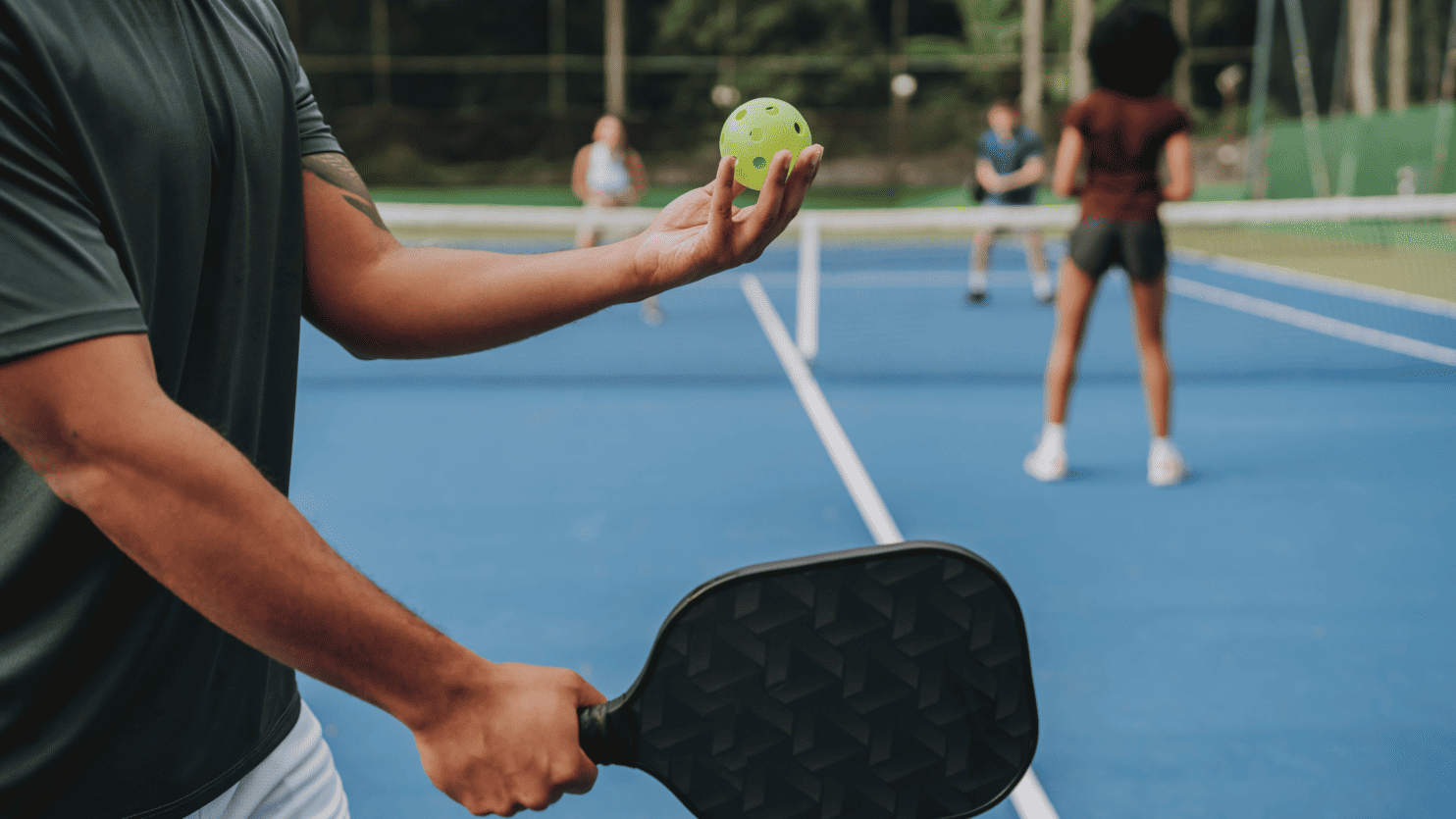
Pickleball has become one of the fastest-growing recreational sports in the United States, attracting players of all ages because it combines exercise, competition, and social interaction. But as participation increases, so does the number of pickleball-related injuries.
The good news is that many common pickleball injuries can be reduced through proper preparation, technique, footwear, recovery, and attention to early symptoms. Understanding which injuries occur most often can help players stay active and spend more time on the court.
What Are the Most Common Pickleball Injuries?
The most common pickleball injuries involve the muscles, tendons, joints, and ligaments of the lower and upper body. Because pickleball requires repeated quick movements, players can experience both overuse injuries and sudden injuries.
Common pickleball injuries include:
- Tennis elbow and other elbow tendon injuries
- Rotator cuff irritation and shoulder pain
- Achilles tendon injuries
- Calf strains
- Knee pain and ligament injuries
- Ankle sprains
- Hamstring and other muscle strains
- Low back pain
- Wrist injuries
- Falls resulting in bruises, fractures, or other trauma
The risk can increase when players suddenly increase their playing time, skip warm-ups, play on unfamiliar surfaces, or continue playing despite pain.
Why Does Pickleball Cause So Many Overuse Injuries?
Pickleball can cause overuse injuries because the sport involves repetitive motions performed over multiple games and sessions. Players repeatedly swing the paddle, rotate their torso, bend their knees, and accelerate or stop quickly.
Over time, these repeated movements can place stress on tendons and joints. Elbow and shoulder problems are particularly common among players who increase their activity without allowing adequate recovery.
Overuse injuries often develop gradually rather than from one obvious incident. Persistent soreness, stiffness, weakness, or pain during certain movements may be an early warning sign.
Why Are Ankle and Knee Injuries Common in Pickleball?
Ankle and knee injuries are common in pickleball because players frequently change direction, move backward and forward, and stop suddenly. These movements can challenge balance and place significant forces on the lower extremities.
An ankle may roll during a quick lateral movement, while the knee can experience stress during sudden stops or awkward landings. Previous injuries, muscle weakness, poor balance, and inadequate footwear can further increase risk.
Players can reduce these risks by strengthening the muscles around the hips, knees, and ankles and by practicing controlled changes of direction.
How Can Players Prevent Pickleball Elbow and Shoulder Pain?
Players can help prevent pickleball elbow and shoulder pain by focusing on proper technique and avoiding excessive repetitive swings. Grip size, paddle weight, swing mechanics, and playing frequency can all influence stress on the upper extremity.
A proper warm-up can also prepare the shoulders, elbows, wrists, and upper back for activity. Players should gradually increase their playing time rather than going from occasional games to several hours on the court.
Pain that repeatedly returns during or after play should not simply be ignored. Persistent symptoms may indicate an underlying tendon or joint problem that needs evaluation.
How Important Are Shoes for Preventing Pickleball Injuries?
Pickleball shoes are important because the sport requires frequent lateral movement, stopping, and starting. Running shoes are designed primarily for forward motion and may not provide the same level of lateral stability needed for court sports.
Players should choose footwear designed for the surface where they play and replace worn-out shoes when the cushioning or traction begins to deteriorate.
Good footwear cannot eliminate injury risk, but it can provide better support and traction during quick movements.
How Can Warming Up Help Pickleball Players Stay Healthy?
A proper warm-up helps prepare the body for the demands of pickleball. Instead of immediately beginning competitive play, players can spend several minutes performing light cardiovascular activity followed by dynamic movements.
A pickleball warm-up may include brisk walking, gentle side-to-side movements, controlled lunges, leg swings, shoulder circles, and sport-specific movements.
The goal is to gradually increase circulation and prepare the muscles and joints for acceleration, rotation, and changes in direction.
What Strength Exercises Can Help Prevent Pickleball Injuries?
Strength training can help players tolerate the physical demands of pickleball. Exercises that target the legs, hips, core, shoulders, and forearms can improve strength and stability.
Lower-body strengthening is especially useful because pickleball requires repeated squatting, lunging, and directional changes. Core and upper-body exercises can also support efficient movement and help players maintain control during swings.
Strength training should complement pickleball rather than leave players excessively fatigued before playing.
How Much Recovery Do Pickleball Players Need?
Recovery is an important part of staying on the court longer. Muscles and connective tissues need time to adapt to physical activity, particularly when a player is participating several days per week.
Alternating harder playing days with easier activity can help manage physical stress. Adequate sleep, hydration, nutrition, and rest can also support recovery.
A player who continues increasing activity despite persistent soreness may eventually turn a manageable irritation into a more significant injury.
When Should Pickleball Players Stop Playing Through Pain?
Pickleball players should stop playing when pain is sharp, worsening, associated with significant swelling, or causing weakness or instability. A sudden pop, inability to bear weight, major loss of motion, or visible deformity should also receive prompt medical attention.
Mild post-exercise soreness can be different from pain that changes how a person moves. Continuing to play through significant symptoms can potentially delay recovery and make the underlying problem more difficult to treat.
How Can Players Stay on the Pickleball Court Longer?
Players can stay on the pickleball court longer by treating injury prevention as part of their training rather than an afterthought. A combination of gradual conditioning, proper warm-ups, strength training, appropriate footwear, sound technique, and adequate recovery can reduce unnecessary stress on the body.
Just as importantly, players should pay attention to early symptoms. Addressing recurring pain before it becomes severe may help prevent a short-term problem from becoming a long-term limitation.
For recreational and competitive players alike, the goal is not simply to play more pickleball. The goal is to keep playing safely, consistently, and comfortably for years to come.
Medical Disclaimer: This article is for educational purposes only and is not a substitute for professional medical advice, diagnosis, or treatment. Anyone experiencing persistent or significant pain after playing pickleball should seek an appropriate medical evaluation.
[gravityform id=10 title=false description=false]